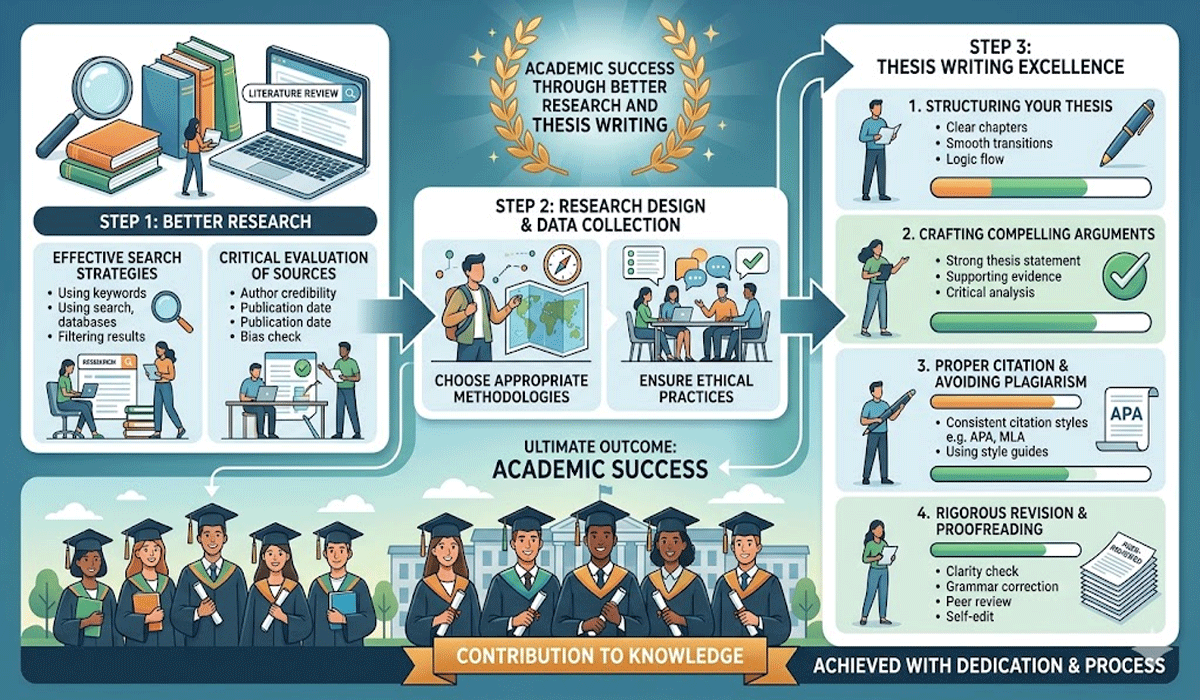
Professional analysis guide that explains structured methods, key principles, and practical techniques to achieve consistent, reliable results with clarity.
In today’s fast-paced and data-driven environment, professional analysis plays a crucial role in achieving consistent and reliable results. Whether applied in business, research, education, or decision-making processes, structured analysis allows individuals and organizations to move beyond guesswork. By relying on clear frameworks and logical evaluation, professionals can reduce uncertainty and make more informed choices.
A structured approach to analysis helps transform complex information into actionable insights. Instead of being overwhelmed by raw data or scattered observations, analysts can categorize, compare, and interpret information systematically. This clarity not only improves accuracy but also increases confidence in the final outcomes, making consistency easier to achieve over time.
Below, Best Essay Writers will provide some explanations regarding Reinventing Learning Systems for an Innovation-Driven Future.
Key Principles Behind Consistent Results
Consistency is rarely the result of chance; it is built on clear principles that guide every analytical process. One of the most important principles is objectivity. By minimizing personal bias and focusing on verifiable information, professionals ensure that conclusions are based on facts rather than assumptions. This approach strengthens credibility and long-term reliability.
Another essential principle is repetition with refinement. Consistent results come from applying the same analytical methods while continuously improving them. Reviewing past outcomes, identifying patterns, and adjusting techniques allow professionals to fine-tune their process. Over time, this creates a stable system that delivers dependable results even in changing conditions.
Tools and Techniques For Effective Analysis
Modern analysis benefits greatly from the use of appropriate tools and techniques. Digital platforms, visualization software, and structured templates help organize information efficiently. These tools make it easier to identify trends, compare scenarios, and present findings in a clear and professional manner. When used correctly, they save time and reduce the risk of oversight.
Beyond tools, analytical techniques such as benchmarking, scenario evaluation, and trend analysis add depth to the process. These methods encourage critical thinking and allow professionals to view a situation from multiple perspectives. Combining the right tools with proven techniques ensures that analysis remains both thorough and adaptable.
Readl Also: AI-Powered Assignment Help: Ace Your Essays Effortlessly
Applying Analysis for Long-Term Success
The true value of professional analysis lies in its practical application. Consistent results are achieved when insights are translated into clear actions. This requires strong communication and a well-defined implementation plan. When teams understand not only the findings but also the reasoning behind them, execution becomes more effective and aligned.
In the long term, organizations and individuals who prioritize structured analysis gain a competitive advantage. They are better prepared to anticipate challenges, respond to change, and maintain stability in their results. By committing to continuous learning and disciplined evaluation, consistent success becomes not just achievable, but sustainable.
Conclusion
In conclusion, professional analysis is a vital foundation for achieving consistent and dependable results across various fields. By applying structured methods, maintaining objectivity, and using the right tools, complex information can be transformed into clear and actionable insights. Consistency is not achieved instantly, but through disciplined evaluation, continuous refinement, and practical application. When analysis is approached with clarity and professionalism, it becomes easier to maintain stability, improve decision-making, and achieve sustainable long-term success.
For the latest and most interesting related information, you can also click the TEACHING link.
Image Source:
First Image from silicon-mind.com
Second Image from investopedia.com