Master thesis writing with anti-plagiarism strategies, research tips, and expert guidance to create a unique, high-quality academic paper.
Writing a thesis can feel overwhelming, but with the right approach, it can be an exciting opportunity to showcase your skills. Crafting a compelling thesis requires a clear plan, thorough research, and strong anti-plagiarism practices. By understanding how to organize your work, select credible sources, and present your findings effectively, you can create a unique, academically sound, and stand-out document.
Below, Best Essay Writers will provide practical tips to help you research efficiently, avoid plagiarism, and communicate your ideas clearly. These strategies will guide both novice and experienced researchers toward a successful thesis.
Understand the Research Topic Thoroughly
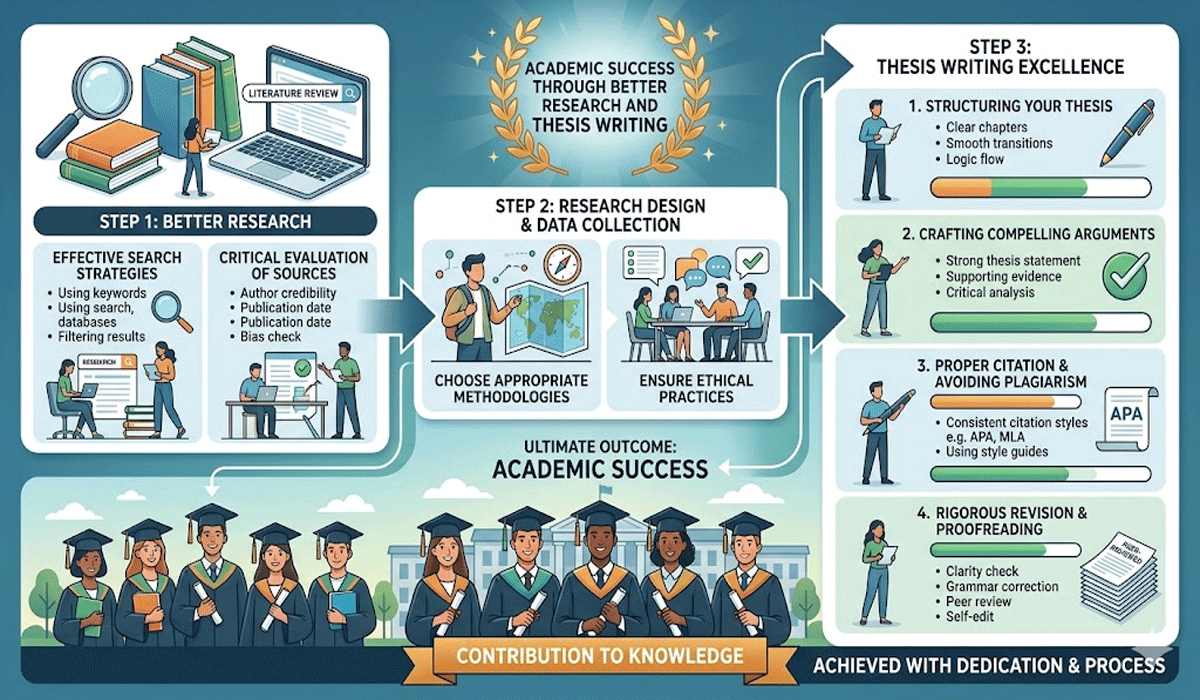
Before starting your thesis, developing a strong understanding of your research topic is crucial. Begin by identifying the key problem or question you intend to address. This clarity helps define the scope of your study and keeps your research focused. Conducting a thorough literature review early allows you to explore existing studies, theoretical frameworks, and unresolved gaps.
Take organized notes, highlighting essential concepts, evidence, and any conflicting findings you encounter. Researching broadly at this stage also ensures you can approach your thesis with originality. By understanding what has already been studied, you can identify areas where your work can contribute new insights.
Plan and Compose Your Thesis Effectively
A clear plan is the backbone of any strong thesis. Start by outlining the main sections, typically including an introduction, literature review, methodology, results, discussion, and conclusion. Break down each section into subsections with specific objectives. For example, your literature review could include thematic or chronological divisions to organize research findings efficiently.
A detailed outline ensures your writing remains focused and avoids unnecessary tangents. Using headings, subheadings, and clear paragraph structures improves readability. Each paragraph should convey a single idea, supported by evidence or analysis.
Also Read: Academic Writing Services: From Idea to Publication
Comprehensive and Credible Research

High-quality research forms the foundation of a successful thesis. Focus on using reputable academic journals, scholarly books, and trusted online databases. Collect a mix of primary and secondary sources to support your argument. While primary sources offer direct evidence, secondary sources provide interpretation and context.
Evaluate every reference carefully for credibility, accuracy, and relevance to your topic. Organize your research materials meticulously. Create a bibliography from the outset, noting publication details, page numbers, and authors. This organization makes it easier to cite sources correctly later, avoiding plagiarism.
Develop a Clear and Original Argument
Your thesis should communicate your own voice and unique contribution. Start by clearly stating your main argument or hypothesis. Each paragraph should advance your argument logically, supported by evidence from your research. Avoid copying text from sources; instead, paraphrase and synthesize information while giving appropriate credit.
This demonstrates your understanding and prevents plagiarism. In addition to evidence, provide your interpretations and insights. Analyze results critically, noting patterns, inconsistencies, or surprising findings. Original thought strengthens the value of your thesis and sets it apart from existing literature.
Revise, Check Grammar, and Use Anti-Plagiarism
Revision is essential to ensure clarity, cohesion, and accuracy. Begin by reviewing your thesis for logical flow and structural consistency. Check that each section fulfills its purpose and transitions smoothly into the next. Revising multiple times helps refine your arguments, remove redundancy, and highlight your most important points.
Proofreading focuses on language quality. Correct grammar, spelling, and punctuation errors to maintain professionalism. Clarity is critical; ambiguous sentences can confuse readers and weaken your argument. Reading your work aloud or having a peer review it can uncover mistakes you might otherwise overlook.
Conclusion
Writing an impressive thesis requires a combination of careful planning, thorough research, original thinking, and strict adherence to academic integrity. By understanding your topic, structuring your work logically, conducting credible research, and developing unique arguments, you can produce a thesis that truly reflects your expertise.
Revising diligently and using anti-plagiarism tools ensures clarity and authenticity. Ultimately, mastering these steps not only results in a high-quality thesis but also equips you with essential research and writing skills for your future academic and professional endeavors.
Image Source:
First Image from: blog.ipleaders.in
Second Image from: www.journal-publishing.com